Welcome back to another blog of mine.
This is 🌙 Chapter 9 of our series. I see this far too often, and it’s something I felt needed to be addressed.
Do we even care about ourselves?
May Allah have mercy upon us.
This is the reality of sins after death—that they don’t always end when our life does.
How often do we see posts like this:
“Please go report this account. May Allah have mercy on them—they passed away.”
Most of the time, it’s people we relate to. People our age. Young Muslims—men and women— doing the same things we are doing right now.
Death, wallahi, has no age restriction.
They were living their lives just like we are today. Scrolling. Posting. Laughing. Sinning openly. Planning for tomorrow.
And then—just like that—it ended.
Now they’re gone.
And the same people who once liked their posts are asking others to report their account, hoping it gets taken down because of all the haram still displayed on it.
Think about that.
The life ended… but the sins didn’t.

When Sins Follow Us Into the Grave
I remember a while ago, a brother passed away. I didn’t know him personally, but my social media was flooded with the usual posts:
“Please go report this account. May Allah have mercy on them—make duʿā’ for them.”
So I did. I went to his Instagram and reported the account. He had posts and highlights filled with music. I didn’t even listen to them. But wallahi, I felt terrified for him. He had just entered the first stage of the hereafter—a reality I will speak about more deeply in a later chapter.
Then a friend of mine said something that shook me.
He said the brother was one of his “opps.” And because he hated him so much, he joked that he would replay his highlights on repeat—just so the brother could be punished more in the hereafter.
I was shocked.
I said, “What’s wrong with you?”
Even though he was joking, that moment forced me to reflect.
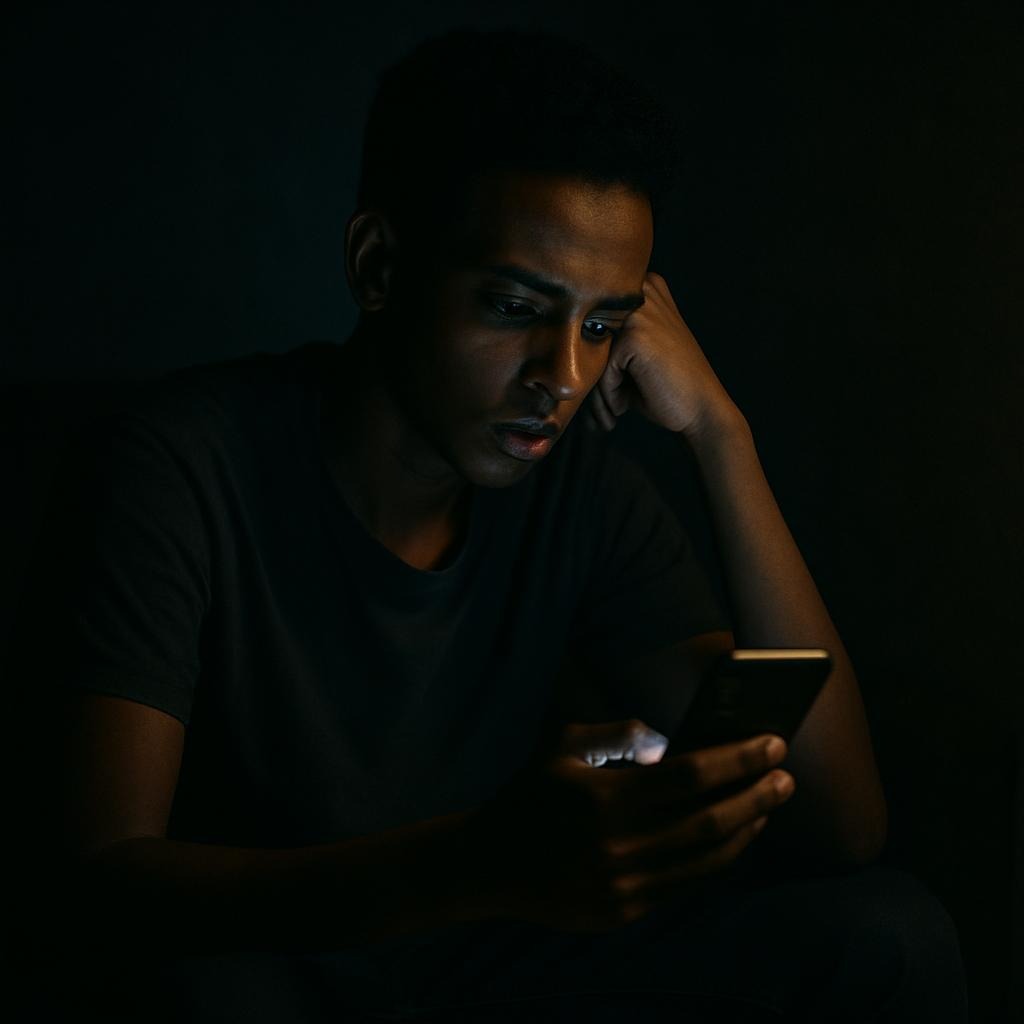
But what if this were my account?
What if tomorrow, my name was the one being shared?
What if people were saying, “May Allah have mercy on them” about me?
Would my page be a source of sadaqah—or a source of regret?
Would people scroll through reminders of Allah, or through music, immodesty, arrogance, and moments I thought were harmless? Would my highlights still be calling others to sin while I stand alone in my grave, unable to delete a single thing?
That thought terrifies me.
Because death doesn’t ask for permission. It doesn’t wait for repentance. It doesn’t care about our plans to “change later.”
Once the soul is taken, the record is sealed.
And what remains is what we chose to leave behind.
So ask yourself—honestly:
If your account became evidence tonight… would it testify for you, or against you?
We worry so much about being judged by people while we’re alive, yet we forget that one day even our own actions will turn against us.
And the scariest enemy won’t be Shayṭān.
It will be the version of yourself who knew better—and still chose to post it.
Clean Your Account, Clean Your Heart
So don’t wait for someone else to clean your account for you.
Do it now—while you still have breath.
While repentance is still accepted.
While the door of mercy is still wide open.
Clean your account.
Delete what you know is wrong.
Unfollow what pulls your heart away from Allah.
Stop posting things you would be ashamed to stand before Him with.
But understand this: cleaning your account without cleaning your heart will never be enough.
Because Allah doesn’t just see what you post—He sees why you post it.
The intention.
The craving for attention.
The desire to be seen.
The love of the dunya that slowly replaces the love of the ākhirah.
And yes—Allah is Ar-Raḥmān, Ar-Raḥīm.
His mercy is greater than our sins.
His forgiveness is always near.
But His mercy is not an excuse for negligence.
If you choose to live your life the way you are living right now—fully aware of what you are doing—then don’t blame Allah for the consequences. Don’t say, “Why did this happen to me?” or “Why am I being punished?”
You were warned.
You were reminded.
You were given time.
Allah did not wrong you.
You wronged yourself.
Mercy is offered—but responsibility is required.
So return.
Not tomorrow.
Not after Ramaḍān.
Not after “one last post.”
Return now—before your account outlives you, and your actions speak when you no longer can.
Take this from me:
You know, even if you’re not ready to change yet—even if you’re going to keep doing what you’re doing—I still advise you to do one thing.
Share your passwords with someone you trust. Someone who fears Allah. Someone who will step in if you no longer can.
Not so they can invade your privacy while you’re alive—but so that if you pass away suddenly, they can delete what needs to be deleted and protect you from ongoing harm. Because once you’re gone, you can’t clean up anything yourself.
This isn’t encouragement to continue sinning. It’s a reminder that death doesn’t wait for repentance—and preparation is part of responsibility.
Duʿā’
O Allah, do not let our actions be a proof against us.
Forgive what we have posted, what we have shared, and what we forgot—but You never did.
Clean our hearts before You clean our records.
Allow our final traces in this world to be a means of mercy, not regret.
And grant us a return to You before we return to You.
Āmīn.
Check out our Instagram: https://www.instagram.com/modernmuslimstruggles/


Leave a Reply